


How much does an entry-level data analyst really make? You’re not alone. Data is everywhere—businesses rely on it to make decisions, improve products, and stay ahead of competitors. And as demand for data analysts grows, so does curiosity about starting salaries.
In this guide, we break things down clearly—what beginners earn, what factors raise or lower those numbers, and how you can boost your first paycheck. Whether you’re fresh out of college or switching careers, this article gives you a practical view of what to expect and how to grow beyond that first job offer.
Average Salary for Entry-Level Data Analysts in 2025
National Average Salary
Entry-level data analysts in the U.S. with less than two years of experience usually earn $55,000–$72,000 per year. That’s about $4,600–$6,000 per month or roughly $23–$30 per hour, depending on the company, location, and role scope.
While these numbers provide a broad overview, they fluctuate based on factors such as city size, industry, and whether the role is remote or in-office. For instance, analysts in tech hubs or finance centers often start at the higher end.
Salary Ranges Across Experience Levels
To give context, here’s how salaries typically scale with experience:
- Entry-Level (0–2 years): $55,000–$72,000 per year
- Mid-Level (3–5 years): $75,000–$95,000 per year
- Senior-Level (5+ years): $100,000–$130,000+ per year
As you can see, pay jumps significantly after the first few years, especially for those who pick up advanced tools and responsibilities
| Experience Level | Annual Salary | Monthly Pay | Hourly Rate |
| Entry-Level (0–2 yrs) | $55,000–$72,000 | $4,600–$6,000 | $23–$30 |
| Mid-Level (3–5 yrs) | $75,000–$95,000 | $6,200–$7,900 | $36–$45 |
| Senior (5+ yrs) | $100,000–$130,000+ | $8,300–$10,800+ | $50–$65+ |
Factors That Affect Entry-Level Data Analyst Salaries
Starting salaries for data analysts don’t follow a single rule—they depend on a mix of factors. Here’s what makes the biggest difference:
1. Location and Cost of Living
Where you work has a huge impact on pay.
- Big cities like San Francisco, New York, and Seattle often pay the most because living costs and talent competition are high.
- Smaller cities or remote roles might pay less but can offer a better quality of life since expenses are lower.
2. Industry or Sector
Some industries value data skills more than others:
- Finance and tech companies often pay top dollar because data drives major decisions and revenue.
- Healthcare and retail roles typically fall in the middle, offering good pay but less than high-demand tech fields.
3. Education and Certifications
A degree helps, but it isn’t the only way in.
- Certifications like Google Data Analytics, Microsoft Power BI, or Tableau can quickly boost your earning power.
- Bootcamps and short courses can help career changers land entry-level roles with competitive pay.
4. Skills and Tool Proficiency
Companies pay more for analysts who can handle modern data tools:
- SQL and Excel are the baseline for most roles.
- Python, R, Tableau, and Power BI often lead to higher paychecks.
- Cloud and big data tools like AWS or Snowflake can open doors to better opportunities.
5. Company Size and Role Scope
The type of company also matters:
- Startups might pay less upfront but offer growth and learning opportunities.
- Large corporations often pay higher salaries and provide structured career paths.
Regional Salary Insights for Entry-Level Data Analysts
Where you work can change your paycheck as much as your skills or experience. Here’s how location impacts starting salaries:
USA Salary Trends
In the U.S., entry-level data analysts in major tech hubs often earn the highest pay. Cities like San Francisco, New York, Seattle, and Austin lead the pack because demand for data talent is high, and companies have bigger budgets.
On the other hand, roles in smaller cities or rural areas may start lower—often 10–20% less—but living costs can be far cheaper, so your paycheck may stretch further.
Remote Work Impact
Remote roles are changing the pay landscape:
- Companies now hire analysts from anywhere, which opens opportunities for people in lower-cost areas to land higher-paying roles.
- Some firms pay the same rates nationwide, while others adjust pay based on your location.
This shift gives beginners more options than ever before, especially if they have in-demand skills and a solid portfolio.
How to Increase Your Starting Salary as a Data Analyst
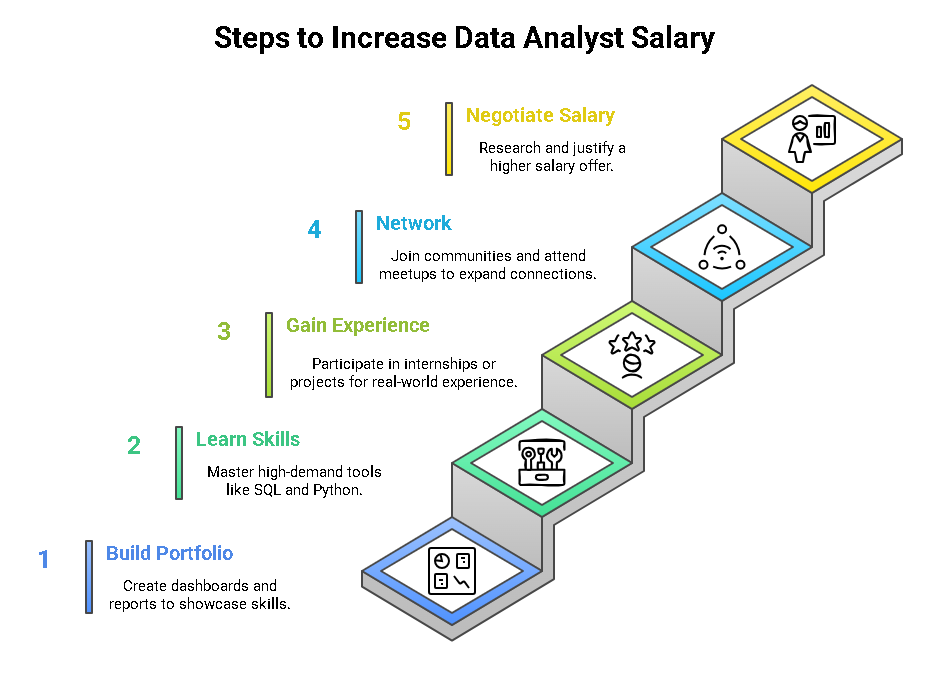
Landing a data analyst role is a great first step, but there are ways to start at the higher end of the pay range. Here’s what actually makes a difference for beginners:
1. Build a Strong Portfolio
Employers want proof you can work with real data.
- Create dashboards, reports, or mini-projects using public datasets.
- Post your work on GitHub or a personal website so recruiters can see your skills in action.
2. Learn High-Demand Skills
The more tools you master, the more valuable you become.
- Start with: SQL, Excel, Tableau, or Power BI.
- Level up with Python, R, or cloud platforms like AWS or Snowflake for higher-paying roles.
3. Gain Experience Through Internships
Even short-term projects or internships help you stand out.
- Look for remote internships or freelance projects if full-time options are limited.
- Real-world experience often leads to better starting offers.
4. Network and Join Data Communities
Many roles aren’t advertised.
- Join LinkedIn groups, local meetups, or online data forums.
- Referrals often lead to interviews with less competition.
5. Practice Negotiation
When you get an offer, research salary ranges for similar roles in your area.
- Politely share the data you found to justify a higher offer.
- Even a small increase at the start can add up over time.
Entry-Level Data Analyst Career Growth Path
Starting as a data analyst often opens doors to higher-paying roles and bigger responsibilities over time. Here’s what the typical path looks like:
1. First 1–2 Years: Building the Foundation
- Most analysts begin by handling basic reporting, data cleaning, and simple dashboards.
- The focus is on learning company data systems and improving technical skills.
- Salaries usually grow 10–20% within the first two years if you upskill consistently.
2. 3–5 Years: Moving to Mid-Level Roles
- With experience, analysts start managing more complex projects and decision-making tasks.
- Job titles often shift to Business Intelligence Analyst, Data Engineer, or Analytics Specialist.
- Salaries typically rise to $75,000–$95,000 or higher by this stage.
3. 5+ Years: Senior and Specialized Positions
- Experienced analysts often move into senior analyst, data scientist, or analytics manager roles.
- These roles involve strategy, team leadership, and advanced analytics techniques.
- Salaries can easily cross $100,000–$130,000+, especially in tech or finance companies.
4. Beyond Analytics: Leadership and Data Strategy
- Some professionals move into Data Engineering, Data Science, or even Chief Data Officer (CDO) paths.
- Leadership roles focus on data strategy, business impact, and scaling analytics across organizations.
Conclusion
Starting as a data analyst isn’t just about landing a paycheck—it’s about positioning yourself for long-term growth in one of the fastest-growing careers. The first offer you accept sets the tone, but your skills, projects, and ability to adapt will shape how quickly your income rises.
Think of your first two years as an investment period: build a portfolio, learn the tools companies actually use, and stay curious about the business side of data. Salaries jump fast for analysts who can translate raw numbers into decisions that save money, boost sales, or uncover new opportunities.
If you approach your career like a data project—collecting the right inputs (skills, certifications, experience) and analyzing the best moves—you won’t just watch salaries rise on paper; you’ll be the one controlling the curve.